


History of Tresco
Tresco is celebrated for its natural beauty, exotic gardens and deep sense of calm - yet this island idyll has also stood on the front line of Britain’s defences since the 16th century.
Was it once part of Lyonesse, the fabled land said to lie beneath the sea and bound to the legend of King Arthur? Did Athelstan drive out the Vikings, or did that chapter close only with the conversion of Olaf Tryggvason in AD 994? Here, history and folklore are closely woven. The island’s story stretches back some 10,000 years, with prehistoric field systems still visible across the landscape.
Christianity left a lasting mark. From 1120, Benedictine monks settled at the Priory - the ruins of which now rest within Tresco Abbey Garden - bringing order and stability to Scilly's northern isles for almost three centuries.
The centuries that followed were less certain. Tresco’s strategic position at the mouth of the Western Approaches drew it into England’s conflicts. Islanders mined tin on Castle Down, harvested kelp for soda ash, and worked as pilots guiding vessels through treacherous waters. Smuggling and wrecking were part of the island’s harder chapters. The Armada, the Civil War (during which Tresco changed hands twice), and the Napoleonic Wars left deep scars, and poverty followed.
A more hopeful era began in 1834, when Augustus Smith was appointed Lord Proprietor of the Isles of Scilly by the Duchy of Cornwall. He broke with the sorry tradition of absentee landlords and chose to make Tresco his permanent home. Augustus restructured agriculture, encouraged new enterprise (including the early flower trade) and built schools across the islands, making education compulsory decades ahead of the mainland.
Yet his most enduring legacies were closer to home: the creation of a remarkable garden carved from bare moorland around the old Priory, and the stewardship of a family who have continued to care for and share its beauty with others.
What began as a vision has become something quietly extraordinary - not merely rare or special, but singular in its setting and spirit.

Historic Monuments
Today, Tresco's layered history lies open to explore. You can walk it at your own pace - along ramparts and through heather - where younger imaginations conjure scarlet-coated soldiers on the horizon, and even the keenest historian will find plenty to linger over.
From the Tudor strongholds of Old Blockhouse and King Charles' Castle, to the Civil War fortification of Cromwell's Castle and the remains of a First World War seaplane base, Tresco’s landscape is quietly studded with stories.
These sites are now cared for by English Heritage, preserved for this generation and those still to come.
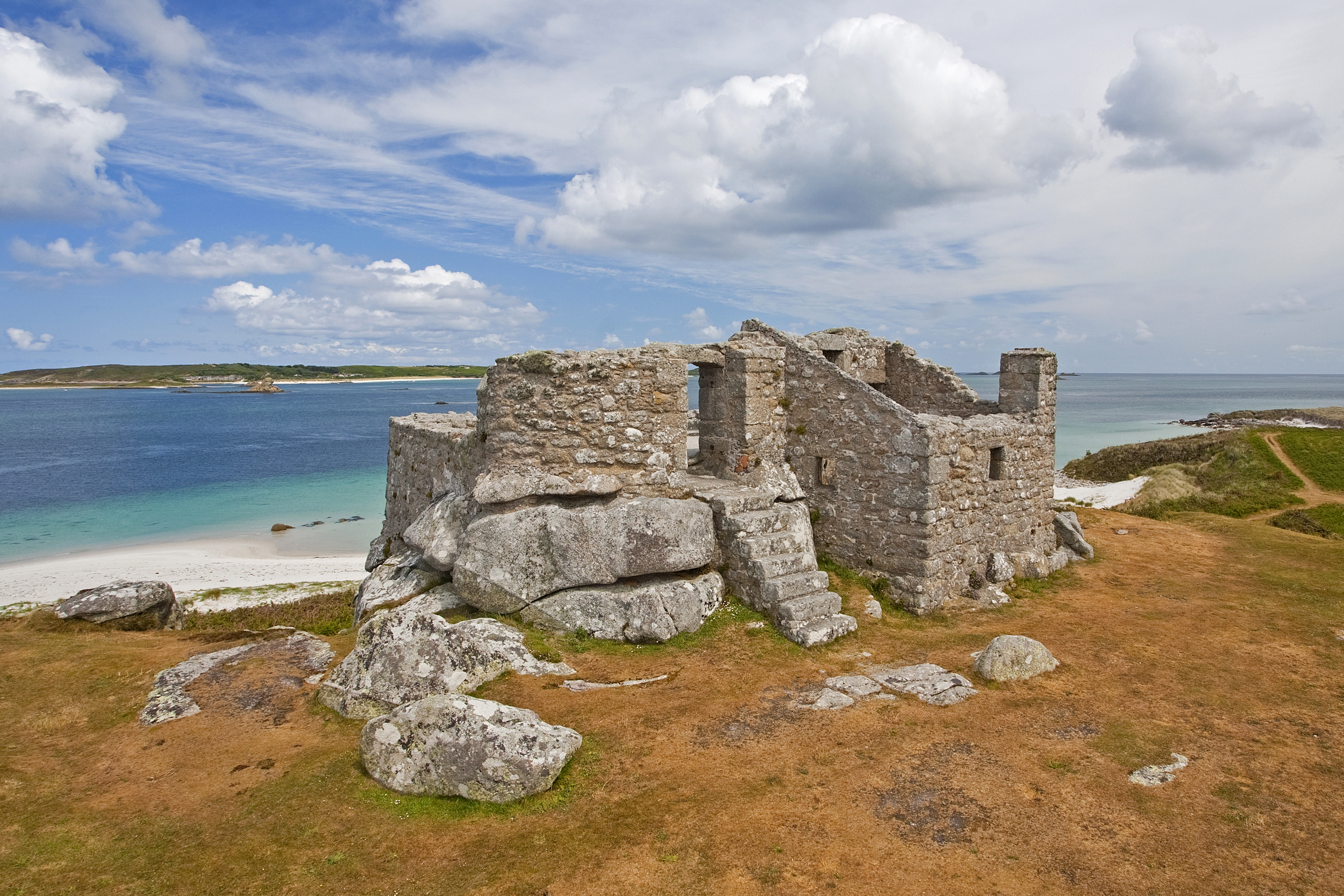
The Old Blockhouse (1548)
In Tudor times, the Isles of Scilly marked a vulnerable edge in England’s defences - a possible foothold for French or Spanish forces seeking safe anchorage on the approach to the mainland.
To strengthen the islands, work began on Old Blockhouse between 1548 and 1554. Its position was carefully chosen, overlooking Old Grimsby Harbour and the narrow channel between Tresco and Tean - a natural gateway into the archipelago.
Like many small Tudor fortifications, it was built for strength rather than comfort. A rectangular gun platform crowns a rocky outcrop, commanding the sea beyond. Life for the garrison stationed here would have been spare and exposed - a simple lean-to shelter with two windows and a fireplace, holding firm against wind, weather and watchful horizons.
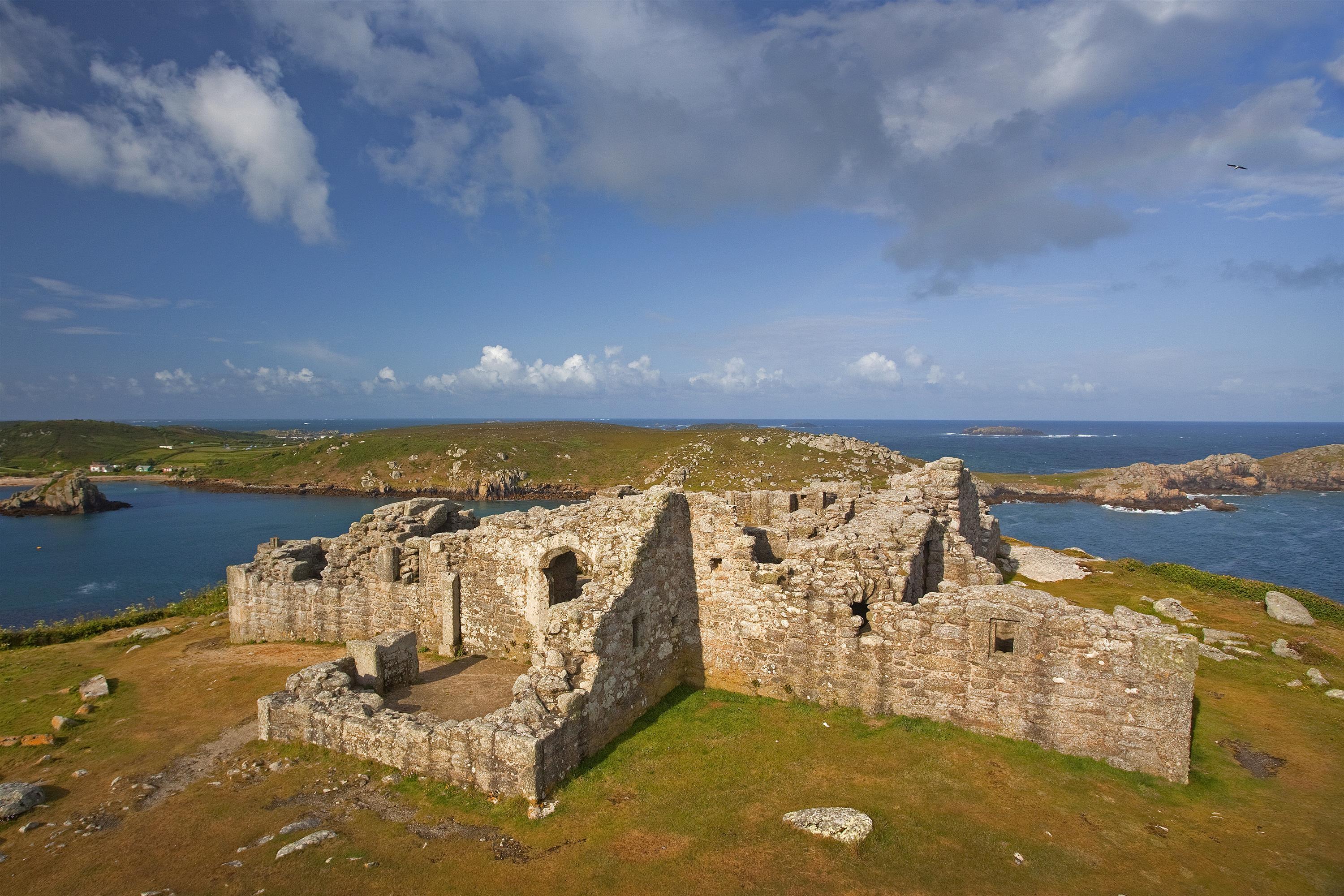
King Charles' Castle (1550s)
Despite its name, King Charles' Castle was built in the 1550s, a century before the Civil War, to guard New Grimsby Harbour and the channel between Tresco and Bryher. Its later Royalist occupation gave it the title by which it’s now known.
Ambitious in design, the fort was set high on the cliffs - a commanding position in theory, though less practical in reality. Its elevation made accurate fire difficult; cannonballs are said to have rolled from the barrels before they could be properly trained on ships below.
Originally cruciform in shape and rising to two storeys, it was far grander than the Old Blockhouse. A large hall with twin fireplaces, a bread oven and smaller chambers offered relative comfort for its garrison. The polygonal gun room held five gunports, with two more above.
In time, the castle fell from favour. It is widely believed that part of it was dismantled to provide stone for Cromwell's Castle, built lower down at the water’s edge - a more practical sentinel for the harbour it still watches today.
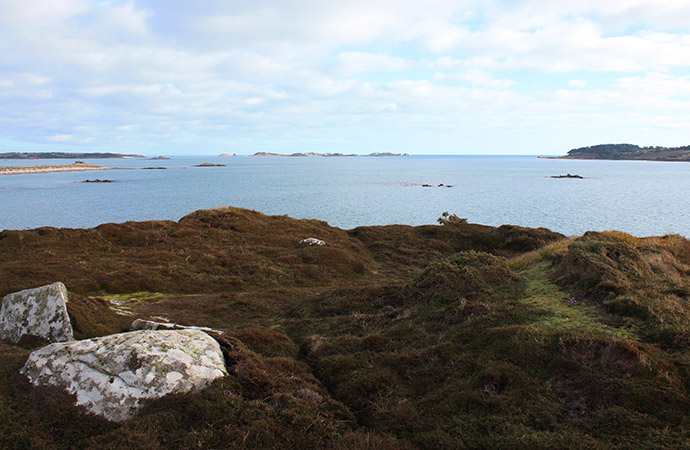
The Civil War and Oliver's Battery
During the Civil War, Scilly’s allegiance shifted with the tide. The islands first yielded to Parliament before declaring for the King, becoming a Royalist stronghold and a base for privateers who preyed on British and Dutch shipping alike.
In 1651, as the conflict drew towards its close, a Dutch squadron arrived seeking the return of captured vessels. Parliament suspected wider intent and sent a fleet under Admiral Blake to regain control of the islands.
After fierce fighting, Parliamentary forces landed on Tresco near the Old Blockhouse and advanced across the island to take King Charles' Castle. With Tresco secured, they established Oliver’s Battery at Carn Near, commanding the waters of St Mary’s Pool and the Road. From this vantage, Royalist positions were steadily subdued, and by June 1651, had surrendered.
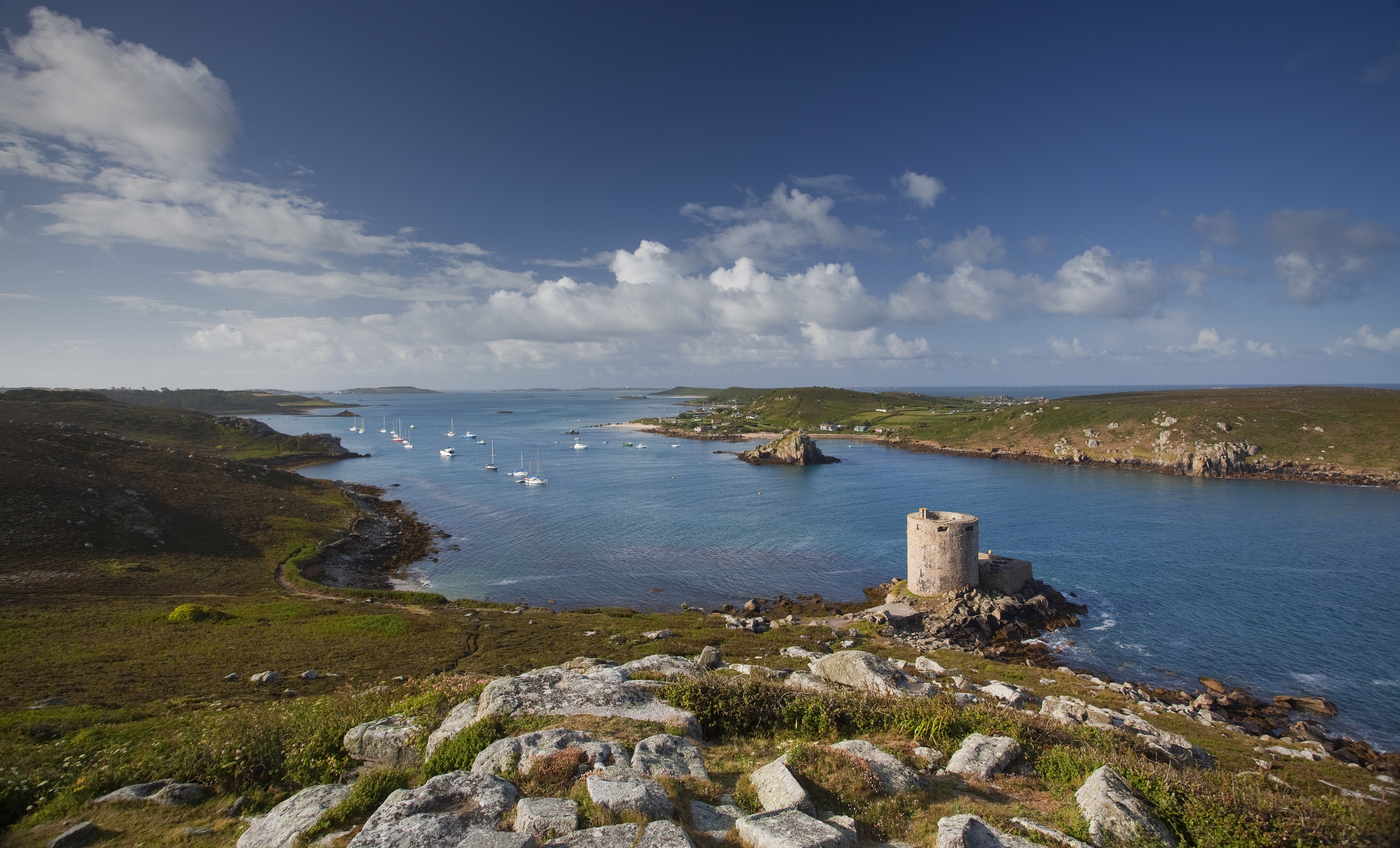
Cromwell's Castle
One of the few surviving stone fortifications from the Interregnum, Cromwell's Castle stands on the site of an earlier Tudor blockhouse, built in part from stone taken from King Charles’ Castle on the heights above.
Constructed by Parliamentarian forces after Admiral Blake retook the islands in 1651, it takes its name from Oliver Cromwell, then Lord Protector of England.
Its position was deliberate. Guarding one of the principal approaches into the archipelago, it commanded the channel so effectively that any hostile fleet would have struggled to land troops on this side of Tresco without first overcoming the castle itself.
Originally, the structure comprised a basement, two heated upper floors - their joist holes and fireplaces still visible - and a rooftop gun platform with six widely splayed gunports offering sweeping lines of fire. In the 18th century, a lower seaward gun platform was added, refining its defensive strength and the view it still holds across the water today.
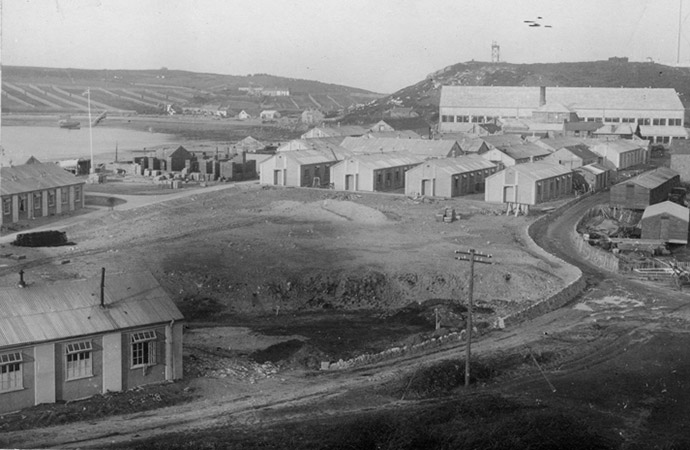
Tresco Sea Plane Base
During the First World War, Scilly’s strategic importance endured - though the threat had shifted. German submarines stalked Allied shipping in the Western Approaches, and the islands once again found themselves on the defensive line.
Aircraft offered a new advantage: from the air, the faint wake of a periscope could be spotted miles away. In January 1917, a flying boat and seaplane base was established at Porthmellon on St Mary’s. Concerns that the bay was too exposed soon proved justified, and before operations were fully underway, the base was relocated to New Grimsby on Tresco.
The station occupied the southern edge of the bay. At first, ratings lived under canvas, but permanent buildings quickly followed - offices, quarters, a canteen, a sickbay - along with hangars and a slipway for the H12 flying boats. The first patrol flew on 28 February 1917. Over the following two years, aircraft from Scilly reported thirteen U-boat sightings and launched nine attacks. It was from RNAS Tresco that the first successful sinking of a U-boat by aircraft anywhere in the world was achieved.
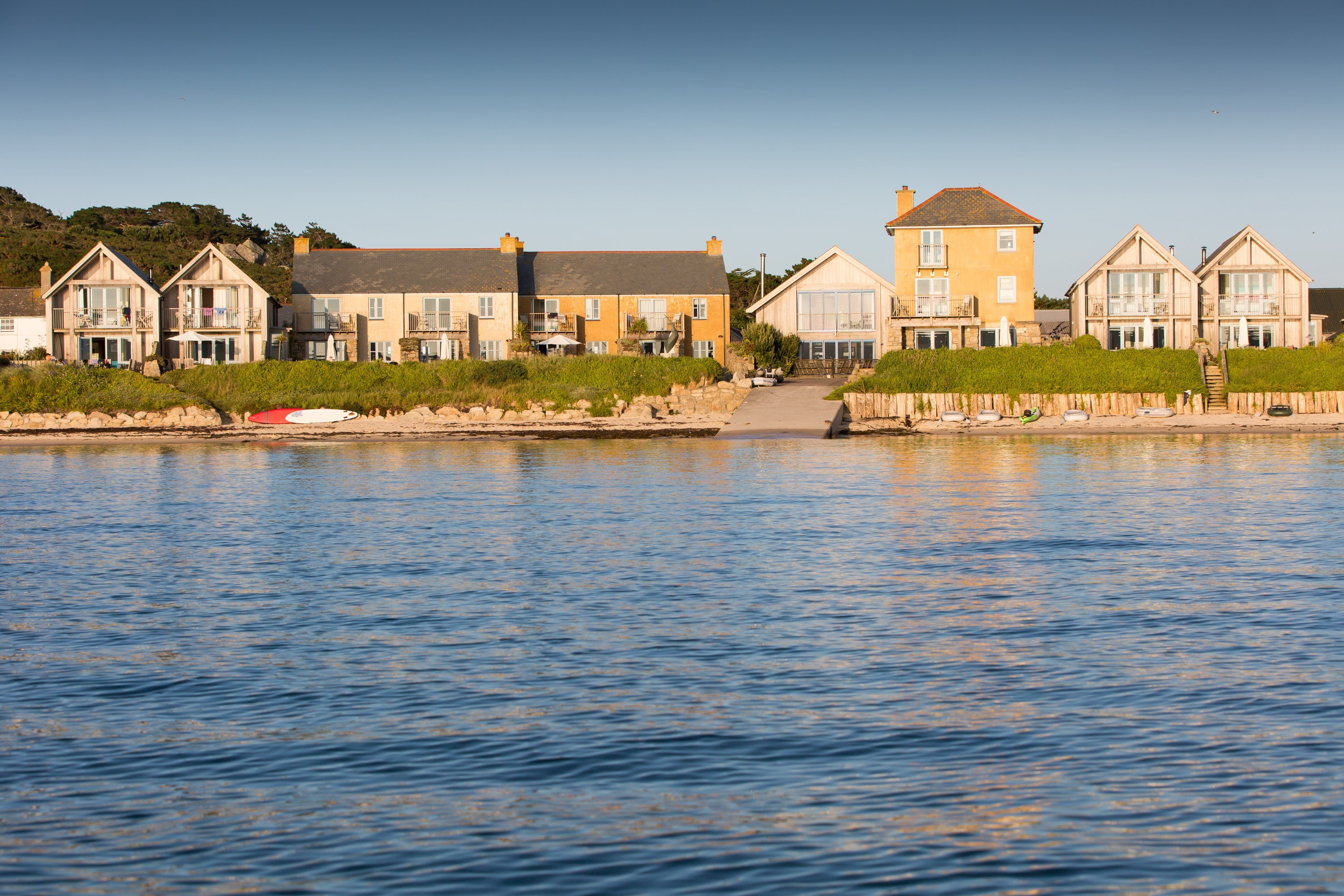
Today, the site has softened into island life once more. The Flying Boat Cottages, café and spa stand where hangars once faced the sea, and the original launch rails remain visible in the slipway at the water’s edge. Cottages Puffin, Tern and Kittiwake were once a potato store requisitioned for bomb storage, while The Power House - another adapted agricultural building - survives as Old Mill Cottage. The past lingers here quietly, woven into the fabric of the present.